
Vulnerability Management with System Context
Built for the way
attacks actually happen.
The platform connects endpoint observations to sourced vulnerability context, deterministic analytics, and AI analysis with practitioner review.
Reviewable endpoint queries and telemetry collection.
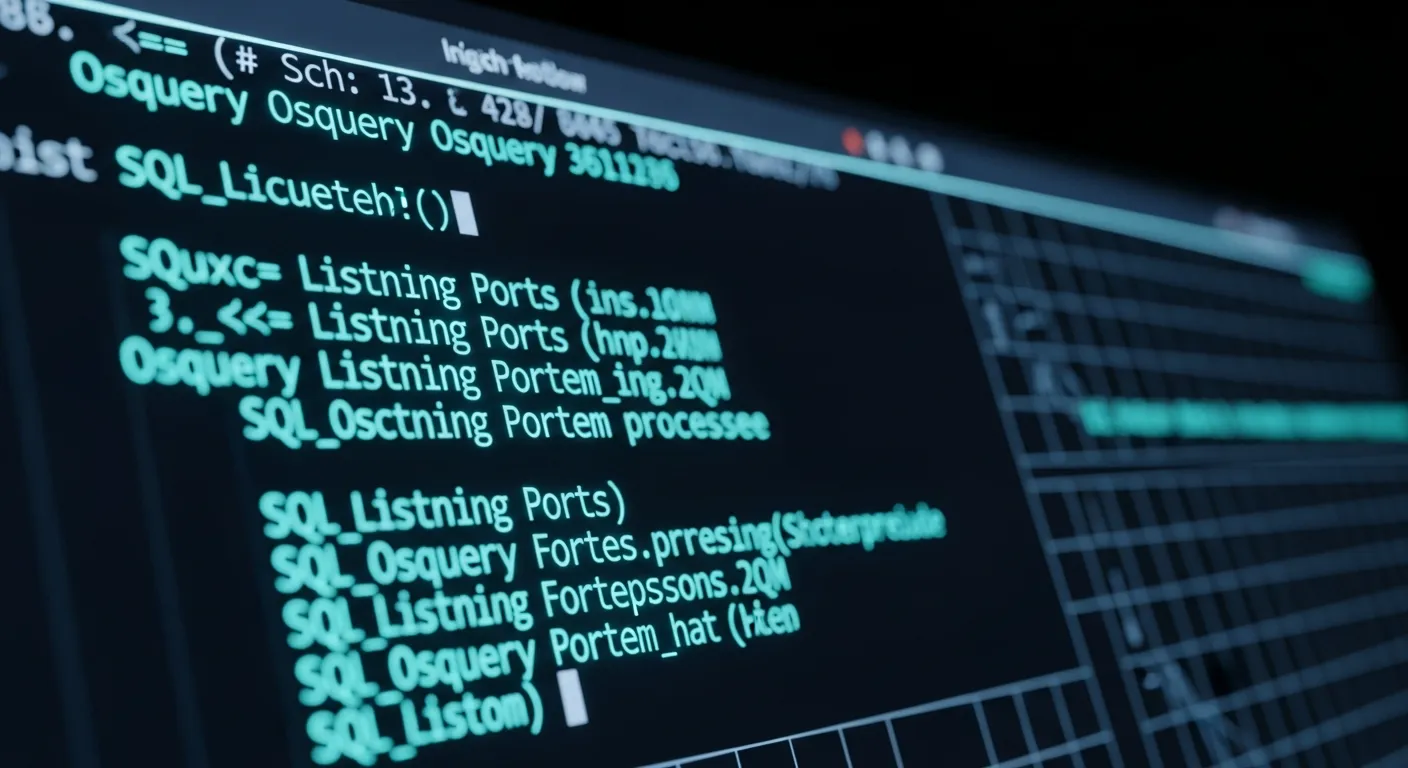
Artemes AI uses Fleet and osquery to collect scheduled Windows and Linux endpoint observations. Raw results can be retained in BigQuery for deterministic analysis and replay.
- Explicit query schedules: Operators can review what is collected and tune schedules for their environments.
- Comprehensive tables: Native access to processes, users, network_interfaces, listening_ports, kernel_modules, and file events.
Collection performance depends on the selected tables, query constraints, schedule, endpoint, and fleet size.
uid = 0
port = 6379
protocol = 6
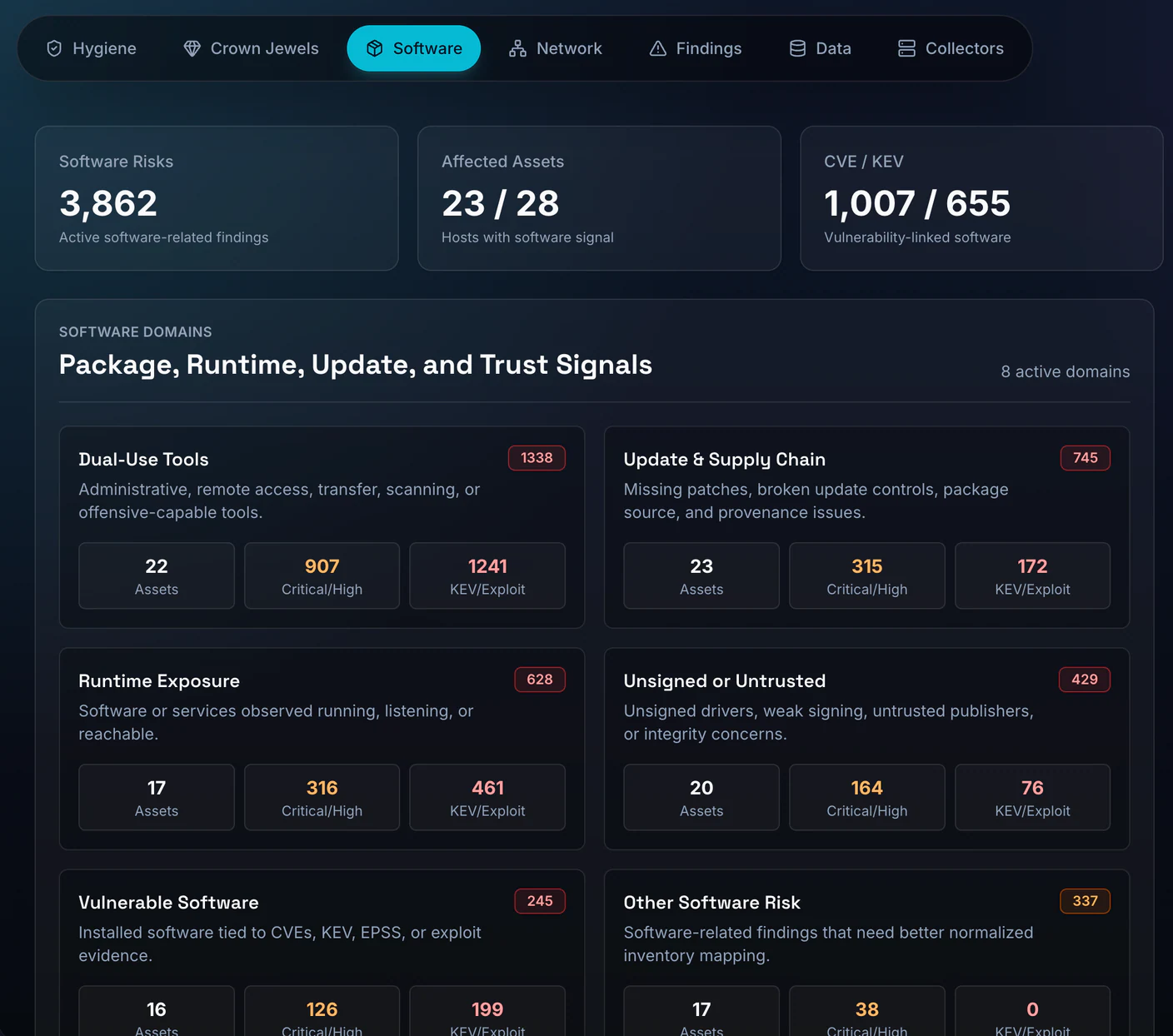
Software evidence organized for review.
The Software workspace groups package, runtime, update, trust, and vulnerability signals so operators can see how the evidence is distributed before opening individual findings.
Counts by domain for assets, severity, KEV, and exploits provide a navigable starting point rather than a claim about risk on their own.
1. Raw Telemetry
Our distributed telemetry streams actual system state, running processes, and open ports to GCP Pub/Sub.
2. Bounded AI Draft
The analysis service can draft from a compact asset case file when model interpretation is useful.
3. Practitioner Review
Draft analysis is checked for unsupported claims and retained with evidence and review provenance.
Security analysis grounded in evidence and system context.
Version and CVE data are only part of the case. Artemes AI assembles bounded asset context and can use a language model to draft analysis where interpretation is useful.
The workflow keeps sourced vulnerability facts, deterministic observations, model inference, and missing evidence separate for practitioner review.
Evidence Boundary and Quality Guards
The prompt contract requires conclusions to stay within the supplied case file. Deterministic checks block unsupported exposure, threat, outcome, severity, control, and compliance claims.
Risk Scoring: Beyond theoretical CVSS.
CVSS is a starting point, not the answer. A critical vulnerability on an isolated internal dev server is not the same risk as a medium vulnerability on an API gateway exposed to the public.
Artemes AI records sourced exploit context, observed exposure, asset criticality, compensating controls, and missing context when those inputs are available.
The output records priority reasons, reducers, confidence, missing context, and a recommended next step.
Heap buffer overflow in libwebp
Found on prod-edge-gateway-01
$ sudo systemctl restart nginx
Remediation guidance with evidence.
Recommendations connect a proposed next step to the observed evidence so a practitioner can validate it before execution.
Finding Review
Review recommendation text, evidence, and finding context within the selected customer workflow.
GET /api/dev/remediations?customerId={id}Infrastructure Integration
Move an approved change into the infrastructure workflow your team already controls.
# Validate in staging before production rollout
Automated Compliance Mapping
Where reviewed mappings exist, show relevant control context and the remaining verification gap.
Evidence observed — verify applicability and effective state
End-to-End Architecture
API Design
Selected application workflows are available through API routes that enforce customer context and are used by the product UI.
- Findings, assets, and dashboard reads
- Review, assignment, due date, and status workflows
- Report schedules and administration within each customer context
https://www.artemes.ai/api/dev/findings?customerId=300 \
-H "Authorization: Bearer $ARTEMES_TOKEN" \
"data": [
{
"id": "fnd_982hjsdf8",
"cve": "CVE-2024-21626",
"status": "critical",
"remediation_ready": true
}
]
}
Current Design Controls
These statements describe the product design. They are not a certification, guarantee, or claim that the platform determines compliance.
Stop triaging. Start remediating.
Request early access to evaluate the telemetry, evidence, review, and workflow model against your environment.